
As millions of Americans prepare for the early December weekend, a powerful winter storm is sweeping across the country, prompting urgent weather alerts for six states and raising concerns about travel delays, power outages, and rapidly deteriorating road conditions. The National Weather Service (NWS) has warned that this storm will bring heavy snow, strong winds, and sharp temperature drops from Sunday, December 7 through Monday, December 8, marking one of the most widespread winter weather events of the season so far. With snowfall totals ranging from a dusting in the Midwest to more than a foot in Alaska, state officials are urging residents to prepare for sudden weather changes, especially in areas that rarely see significant early-season snow.
Table of Contents
Winter Storm Alerts Issued Across Six States
The NWS has issued winter storm warnings, watches, and advisories across Alaska, Illinois, Michigan, South Carolina, Virginia, and Wyoming, making this multi-state system unusually large for early December. What stands out about this storm is the variety of conditions expected in each region. While the Midwest will see lighter snow, the Pacific Northwest and parts of Alaska are bracing for widespread heavy snowfall, strong wind gusts, and near-zero visibility at times. Even states in the Southeast, such as South Carolina and Virginia, are preparing for measurable snowfall that could easily disrupt daily life and create hazardous driving conditions due to colder-than-normal temperatures. Residents in all affected states are advised to monitor updates on Weather.gov, as forecasts continue to adjust based on the movement of the Arctic air mass interacting with the moisture-rich system pushing in from the west.
Alaska Expected to Experience the Heaviest Snowfall
Among all states, Alaska is set to receive the heaviest snowfall, with communities such as Elfin Cove, Pelican, and Haines expecting 8 to 12 inches of snow along with fierce winds reaching above 40 miles per hour. These winds, combined with freezing temperatures, are expected to make travel extremely dangerous through Monday morning. The Icy Strait Corridor will likely experience several waves of intense precipitation due to a southward-moving Arctic boundary.
The National Weather Service office in Juneau has emphasized that a shift toward colder temperatures is merging with deep moisture, creating the perfect setup for widespread accumulating snow. Forecasters noted that multiple snow bands will continue to develop through Sunday, meaning visibility may worsen with little warning. Authorities recommend avoiding nonessential travel and checking local advisories frequently.
Expected Snowfall in Key Alaska Locations
| Location | Forecast Snowfall | Expected Wind Gusts |
|---|---|---|
| Elfin Cove | 8–12 inches | 40+ mph |
| Pelican | 8–12 inches | 40+ mph |
| Kake | 3–5 inches | 35–40 mph |
| Port Alexander | 3–5 inches | 35–40 mph |
Wyoming, Michigan, and the Midwest Preparing for Rapid Weather Changes
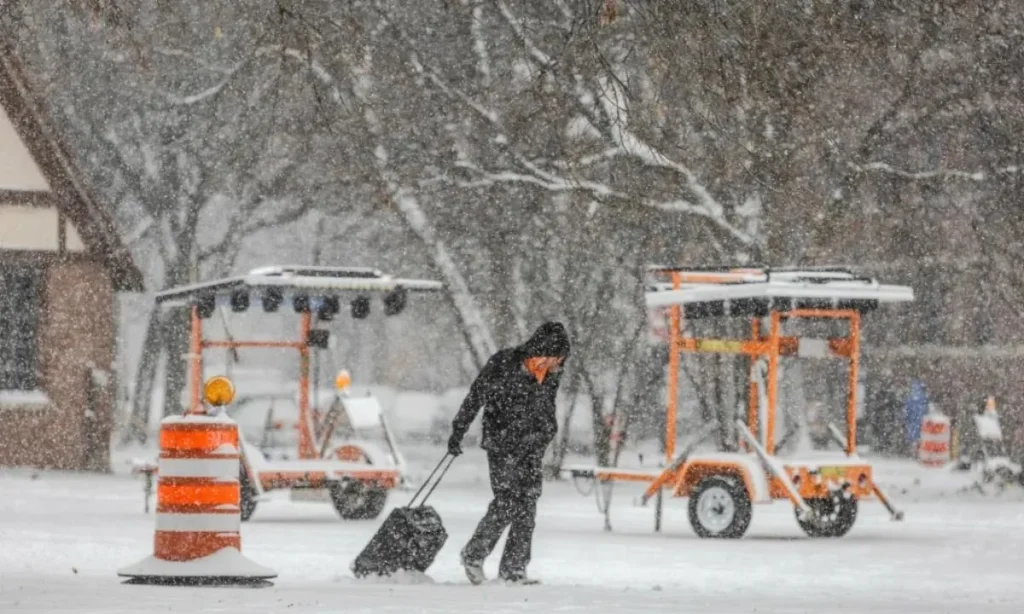
Wyoming is also facing significant winter weather, especially in the Teton and Gros Ventre Mountains, where up to 10 inches of snow may fall. The combination of high-altitude snowfall and strong winds could create drifting snow and sudden periods of low visibility. Outdoor enthusiasts and long-distance drivers are encouraged to monitor the Wyoming Department of Transportation and road cameras before planning any travel through mountain passes.
In Michigan, the storm is expected to be driven mostly by lake-effect snow, which is known for producing highly localized but intense snowfall. Central and Western Chippewa counties may see up to six inches of accumulation. Because lake-effect bands move unpredictably, the weather may vary drastically from one town to the next, sometimes shifting from clear skies to heavy snow within minutes. This unpredictability is a major concern for commuters, who are asked to stay alert and allow extra travel time.
Snow Reaches the Southeast, South Carolina and Virginia on Alert
Snowfall in states like South Carolina and Virginia often leads to bigger disruption compared to northern states because the infrastructure and equipment for handling snow are more limited. While these states are expected to receive 2 to 5 inches, the timing and temperature drop could create icy roads, especially during the Monday morning commute. Higher elevations in Virginia’s Blue Ridge Mountains may experience slightly heavier accumulation, along with stronger winds.
Local emergency agencies are working through the weekend to pretreat major roads and highways. Residents are encouraged to follow updates from the South Carolina Emergency Management Division and the Virginia DOT for real-time road conditions and potential school or service delays.
Important Alerts and Safety Reminders
Even though the storm impacts vary widely, several safety recommendations apply across all affected states:
- Weather may change rapidly, especially in lake-effect regions or mountainous terrain.
- Visibility may drop sharply, creating whiteout conditions even during otherwise light snowfall.
- Roads may become icy quickly, particularly in areas with early-season snow or strong winds.
Officials urge people to stock emergency supplies in their vehicles, charge their phones, and avoid unnecessary travel during peak snowfall periods whenever possible.
NWS Urges Residents to Stay Alert and Prepared
The National Weather Service is asking the public to stay “weather-aware” throughout the weekend, noting that forecast adjustments are likely as the system evolves. Residents should rely on official sources such as Weather.gov, NOAA Weather Radio, and state emergency management websites. With more cold air expected next week, early-season winter weather could continue affecting parts of the country.
FAQs
1.Which states are under winter storm alerts right now?
The current alerts apply to Alaska, Illinois, Michigan, Wyoming, South Carolina, and Virginia, though exact conditions vary across each region.
2. Where will the heaviest snow fall?
The heaviest snowfall 8 to 12 inches is expected in coastal and southeastern regions of Alaska, particularly Elfin Cove, Pelican, and nearby areas.
3. Will travel be affected across the country?
Yes. Air travel delays are possible in major hubs such as Chicago and Detroit, while road conditions may become dangerous in all six affected states due to snow and rapidly changing visibility.
4. Is this storm typical for early December?
Large winter storms are common this time of year, but widespread snowfall reaching from Alaska to the Southeast is less typical, making this system more impactful.
5. How can I stay updated with official forecasts?
Visit Weather.gov, check your local NWS office page, or sign up for emergency alerts through state emergency management websites.


